Featured

Blog #4- Sutton Impact Style Blog

As I sit here 5 weeks out recovering from neck surgery, I can’t help but think of all the activities I am missing out on that I would want to be doing this summer-things that are important to my well being. I feel stagnant, which is so opposite to my lifestyle. That stagnant word stands out to me because when I am teaching or coaching my students or athletes I emphasize how important it is not to be stagnant (or lazy). Even the sports that are considered not as fast paced (badminton, tennis, ultimate frisbee, etc.) are not meant for players to be stagnant. I personally am also a goal seeker, a dream chaser. Someone that has to continue to improve my life in all aspects (financially, physically, career-wise, self growth). I also encourage my athletes and students not to be stagnant in their lives when it comes to taking steps to improve as a person and career wise. 

Back to -While I lay here stagnant and limited on what physical activities I can do – one in particular stands out. Pickleball! Don’t get me wrong, I love all sports and activities – In the summer I focus on biking, swimming, running, CrossFit, hiking, walking my dog, and tennis. Pickleball is growing and courts are popping up all over! At the high school I teach at, our tennis courts were just redone and Pickleball courts were added. My hometown has recently built an indoor facility with Pickleball courts and has leagues. When I go to the store, I see Pickleball paddles for sale. It seems to be everywhere! I had found myself googling how to play Pickleball since I do enjoy playing tennis. From my research, an interesting fact I learned is that Pickleball increased in popularity during Covid 19 since it was an activity people could do while social distancing. In the same article, it posed the question of Pickleball being a future sport in the Olympics. While looking into more about Pickleball, one of my favorite facts regarding Pickleball is- The game was first invented in 1965 by three dads in the United States with bored kids. It slowly made its way to Canada and is now the country’s fastest-growing sport.  It made me giggle a little bit, since as parents, grandparents, teachers, siblings, etc. we are always trying to keep children occupied. Pickleball is looked at as “A Game for All.” Pickleball has been around for decades, but appears to be gaining popularity. According to the USA Pickleball Association, it’s one of the fastest growing sports in America. Even Soldiers in the Army Recovery Program are playing Pickleball to help recovery from injuries. Time Magazine writes about the benefits that Pickleball has for seniors. Benefits mentioned include- more calories burned compared to walking, improves balance, movement, coordination, is easy on the joints, keeps the brain sharp, and is a way to socialize- especially with all ages of people. I also know people my age (35 years old) that play it often and are very into it! I plan on teaching Pickleball to my students in the P.E classes I teach going forward!
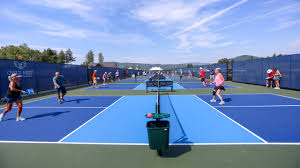
I also looked at the site- USA Pickleball to learn the rules for when I am fully recovered from my neck injury. I love how this site also provided strategy ideas for when playing. Videos were also provided to demonstrate the tips and strategies when playing Pickleball either as singles or as doubles. 

I love the fact that the average pickleball age is 38!  Like I mentioned earlier, one of the articles talks about Pickleball one day being a possible Olympic Sport!  A dream of mine is I had always hoped to make it to the Olympics to compete. With the growing number of physical activities popping up later in life for all aged adults (pickleball becoming popular, CrossFit being invented, I can’t help but wonder what other games/activities will be developed or gain popularity and how this could change the future of sport for adults later in life.  Since the average pro athlete retires at 35. Perhaps opportunities will open up for adults of all ages to have the opportunity to make it to the Olympics because of the take off of a particular activity. This is exciting to think about. It gives that dream of mine some hope! 
While continuing to think of the Olympics and Pickleball playing opportunities, my thoughts then went in the direction of I wish there was an Olympic type event for the higher level person but not at the intensity or Eliteness of the actual Olympics. There are low athletic people , average, high athletic, and elite (professional athletes). When we are done with high school or college sports, most people have to turn to recreational sports. Within these recreational sports there are different levels of abilities and competitiveness. However imagine an opportunity like the Olympics for the above average/competitive level people to be able to participate in? Yes there are events to focus on in adult years to compete in such as triathlons, obstacle races, softball leagues, soccer leagues etc.-These are usually local . Wouldn’t it be awesome to have a USA games for the rest of us? Where standards still need to be met to qualify, awards will still be given, but most of all a sense of accomplishment and fulfillment for us former athletes to strive for to keep us focused, motivated, and fit. 

Food for further thought questions: 

  1. What activity would you like to see be in the Olympics? (Can be an existing activity or an idea of a type of event that doesn’t exist yet)
  1. What are your thoughts about Pickleball? Have you tried it out yet ? 
  1. What are some additional ideas to continue to keep Americans active? 
Featured

Blog #3- Bloggers Choice:

How the use of Social Media is Building Player and Fan Connections 

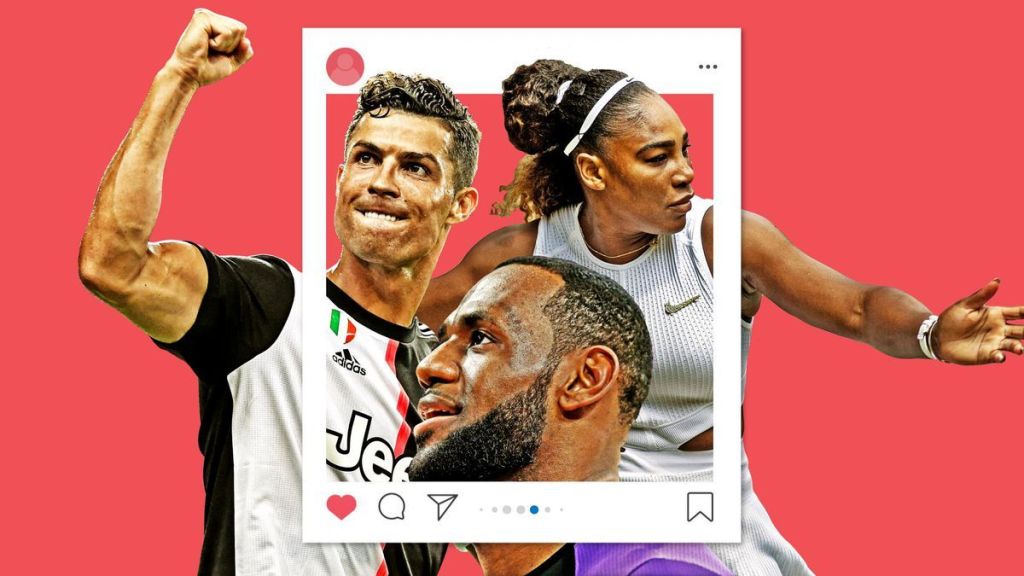
Social Media has been a “ground breaking” platform for sports. Viewers are now able to view games live via social media. They can also watch replays, highlights videos on social media platforms such as Facebook, Twitter, Instagram. Sport fans are way more likely to use twitter compared to those not interested in sports. 

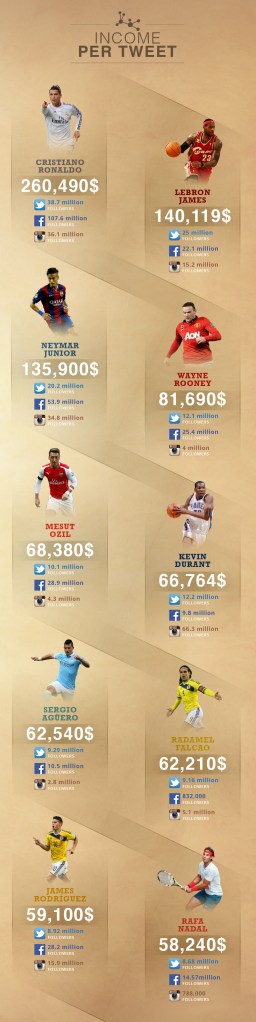
The use of social media has allowed professional athletes to brand themselves and not rely on television networks like in the past to represent them. By athletes being able to do this it has helped all aspects of sports. It helps brands, teams and other aspects related to sport be promoted in addition to companies own advertisements of their products. 

Fans are able to be more engaged in sports via social media. They can comment on posts, like a post, share a post etc. Fans are also able to follow their favorite athletes to get a view of what athletes’ personal lives are like. By viewing professional athletes’ personal life, fans feel more engaged with their favorite athletes. Fans also at times buy products their favorite athletes use. 

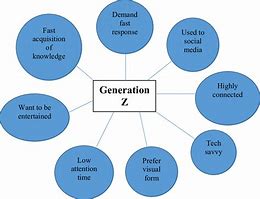
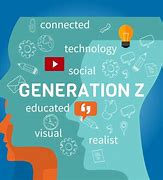
An interesting point was brought up by Heidi Browning (Senior Executive VP & Chief Marketing Officer-NHL) in the article “Consuming Traditional Sports Non-Traditionally,” posted on Sports Business Journal, regarding Gen Z. Browning states, “The other thing that they do is, because of this access to content, they have a thirst for knowledge and it’s changed how they interact with sports. So in previous generations, it was all about the team. People would follow the team, you’d be loyal to the team. Now people are following athletes. Athletes first, in fact. In fact, they’ll even follow athletes in sports they don’t even watch. And so that’s a really interesting change. And it’s changing how athletes build their own brands and behave when they’re not on the field or on the ice.”   Gen Z is reliant on technology and are the ones companies are focused on. In the same article, Chris Marinak, (Chief Operations & Strategy Officer- MLB), also states how Generation Z doesn’t care as much about the actual sports but more so the connections with the athletes. Gen Z is known for their short attention spans and only wanting to watch quick highlights. Older people are also starting to take on these traits as well. 

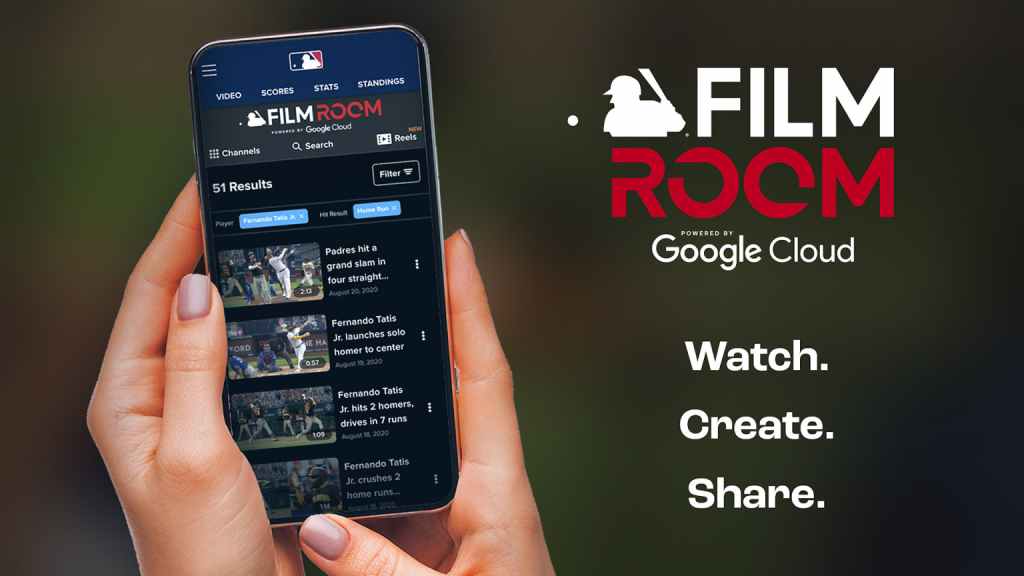
Since fans focus seems to be wanting to connect with players as much as possible, organizations have developed other ways for fans to do so. The MLB has created an MLB Film Room, where viewers can select highlights and create their own highlight reels as well as being able to select a certain category such as curveballs and watch highlights on the chosen focus. This allows younger fans as an educational tool and as a means to also improve their own game, all while being inspired by professional athletes.  

Tik Tok seems to be the focus for many organizations when using social media currently. Trends are constantly changing and allows for organizations to go with the current trends since fans tend to enjoy the ever-changing content from Tik Tok. Tik Tok also allows fans to get recognized by athletes, teams, organizations, and celebrities. 

Although there are many benefits when it comes to social media in sport, there are also some negatives. Athletes’ reputations can be greatly damaged quickly by posting something controversial or that shows them in a negative light instead of the high standard they are expected to be for fans. Here are some examples. 

Filmmaker and co-founder of Religion of Sports, Gotham Chopra, states that athletes are now the brand.  “Because of social media and because of this high visibility, it builds an existing audience. They have distribution. They become cultural curators; whatever they wear, whatever they talk about, whichever supplement they take, what water they drink. And suddenly there are smart people around them saying, ‘Hey, there’s an opportunity here.’”

Chopra also states, “Now any athlete can pick up a phone and go live to their audience, or just create their own content and distribute it through any number of different channels. So it allows a lot of athletes who otherwise wouldn’t have the ability or even the knowledge to turn into their own content hubs.”

Athletes tell their story best. They are becoming producers of their own filmmaking stories. As well as hosting their own podcasts. Companies are on the rise that can help athletes build their own podcast. Not only are professional athletes turning towards podcasts but college athletes too. A media studio is now part of Clemson’s campus for its athletes.  In today’s age: Attention is the new sports oil — and your personal brand is the pipeline.

Athletes are setting themselves up for their life when their playing days are over. By doing this, athletes stay relevant to fans. It also evens the playing field for athletes that may not be as popular or as talented as the top athletes. By creating content that an audience is able to be interested in, athletes are able to gain more popularity. 

Athletes are able to expand themselves in other hobbies and interests besides their sports. Many turn to the entertainment industry by being broadcasters, doing their own podcasts or creating their own production company. Others are diving more into the fashion industry with its connection to sport. The phenomenon has not only created marketing value for athlete sponsors, but it’s provided new ways for those athletes to reach fans directly without having to rely on teams, brands or networks creating the opportunity. 

Documentaries have also been created such as Michael Jordan’s “The Last Dance,” in which he would be considered a producer to his own story which included actual footage and behind the scenes footage of life of Michel Jordan and his team. There will also be a documentary about Tom Brady’s 10 Super Bowl appearances. Both these documentaries allow fans to learn more about specific athletes. As well as the stories behind their career, the journey to get to their successful careers, their childhood, their life off the field, family life, their struggles all while being told by the athlete itself. Interviews no longer need to be the main way for fans to connect and learn athletes’ stories. 

I personally follow a bunch of different professional athletes where I can learn what their training looks like, their personalities, their diets, fashion style etc. Some of the athletes I follow are Sue Bird, Carli Loyd, Diana Taurasi, Tom Brady, Rob Gronkowski, Julian Edleman and many others! 

I can definitely relate to the fact that I do love watching highlight videos also, on Instagram. I follow professional soccer teams, ESPN, NCAA, UConn, etc. on Instagram. I love how I can just see the goals in soccer and not need to watch the whole 90 minute game and potentially miss the goal by turning away at the wrong second. On Instagram I can then continue to watch the highlights again if wanted so I can really focus on moves made by the players, the players setups, players positioning, goalie positioning, and the shot. If I had to rely on watching the game live on TV I would not be able to rewatch the highlights over and over. They would just show the highlights of goals scored a few times if that. 

I can also see how athletes build their own brand through social media and how it creates different opportunities for them especially when they retire. For instance, Sue Bird who is one of my favorite players and I have followed her during her time at UConn, as well as her professional basketball career, has just retired from basketball. However, because of her social media accounts I can still follow her and watch what is next for her as opposed to previous generations when fans lose interest or are unable to continue to stay updated on retired athletes’ lives when they are done with their athletic careers since social media didn’t exist. Sue Bird is also an example of someone who has branched out and created her own social media platform called Togethxr. . TOGETHXR IS A MEDIA AND COMMERCE COMPANY FOUNDED BY FOUR OF THE WORLD’S GREATEST ATHLETES: ALEX MORGAN, CHLOE KIM, SIMONE MANUEL AND SUE BIRD.  Sue Bird along with Alex Morgan, Chloe Kim, and Simone Manuel are hoping to become the fastest growing women’s sports brand by combining forces to create a community for females to be inspired through impactful stories showcasing different female athletes. Togethxr also is focused on creating equal representation of female sports through companies, teams and brands. I am excited to see what this brand will do for female teams and athletes. I think this is just the start of something great and impactful! 

Food for thought Questions:

  1. What are some other athletes that have branched out and created different opportunities to brand themselves. Some examples might be athletes who have created their own company, brand (clothing, sneakers) , podcast, and other inspirational ideas for fans as a way to connect with them. 
  1. Who are some of your favorite athletes to follow on social media and why? What platforms do you use to follow them? (Tik Tok, Instagram, Twitter, etc.)
  1. Are there any athletes whose social media presence has ended up backfiring on their careers? 
  1. Are there any ideas you have for ways athletes can use social media to brand themselves besides Podcasts, Instagram posts, and Twitter posts? Where will social media take us in the future regarding sports? 

Website Evaluation: NCAA

Ease of accessibility 

The NCAA website has a very easy accessibility. I was able to type into google “NCAA .” The first option that popped up was NCAA . com– the official website of NCAA championships. I had to scroll down and then saw NCAA.org – the official athletics website. Once I was on the NCAA.org official website, I was able to browse with ease. I did try to access the NCAA.org website on my phone as well, which was also extremely easy. I did not need to subscribe or become a member to view NCAA.org which I was happy about.

Ease of navigation

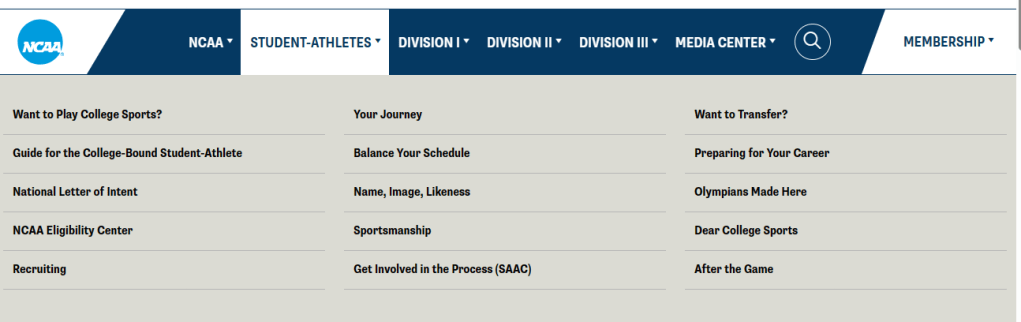
NCAA was very user friendly. This is a site with lots of information when it comes to sports. The main tabs at the top were NCAA, Student-Athletes, Division I, Division II, Division III, Media Center and membership. Visitors could then click on one of the above links and a drop down menu would appear with relevant content for each subtopic. For example for NCAA tab some of the drop down options to choose from was: Want to play college sports?, NCAA eligibility center, Recruiting, A guide for College bound student athletes, Want to Transfer? And several other options. From there, viewers could click on one of those links which would then lead them to move information on the selected topic. The overall home page also had some stories featured, some with pictures, others with just a title. The home page also had a section of the NCAAs priorities: academics, wellbeing, and fairness with some graphics and more information for each. By clicking the priorities section, more articles would pop up with relevant information depending on the selected section. For instance, when clicking on wellbeing there were articles about head injuries, best practices, nutrition, and keeping hearts healthy.  At the bottom of the homepage also had some ways to connect with the NCAA via social media and lots of eye-catching graphics of athletes. 

Use of Interactivity 

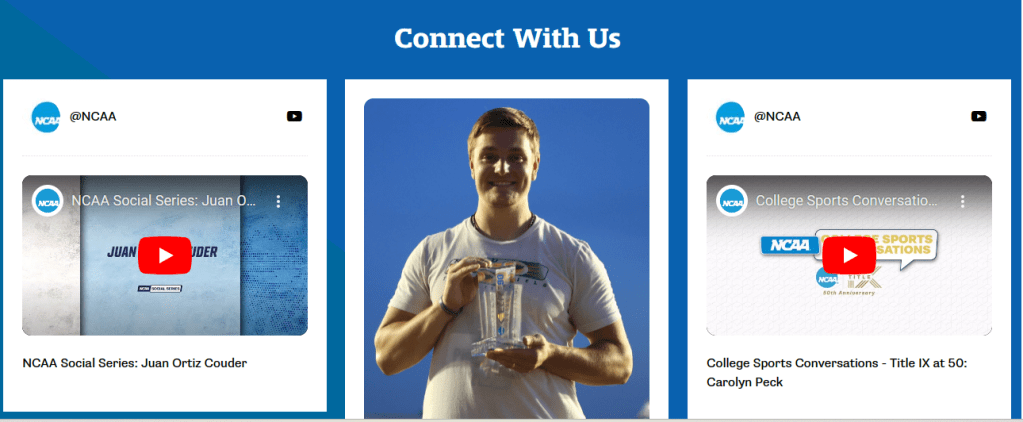
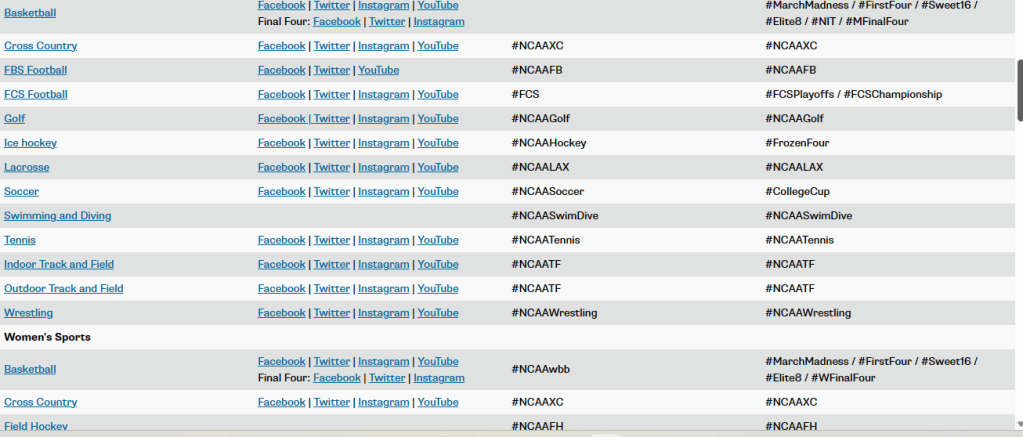
For use of interactivity, The NCAA has a few different options compared to some of the ideas listed here.  On the NCAA site, visitors can click on the membership section where they can select a division and get important information for each division. There are scholarships and forms in this section for future student athletes to apply to or forms to use. There is also a whole “Connect with Us” section on the homepage of NCAA with multiple athletics pictures and ways to connect. Some examples include Facebook, YouTube, Instagram, Twitter all with the caption @ncaa. Fans could also follow specific sports and divisions on social media as well. A page with this information was provided on the site. 

Use of Video 

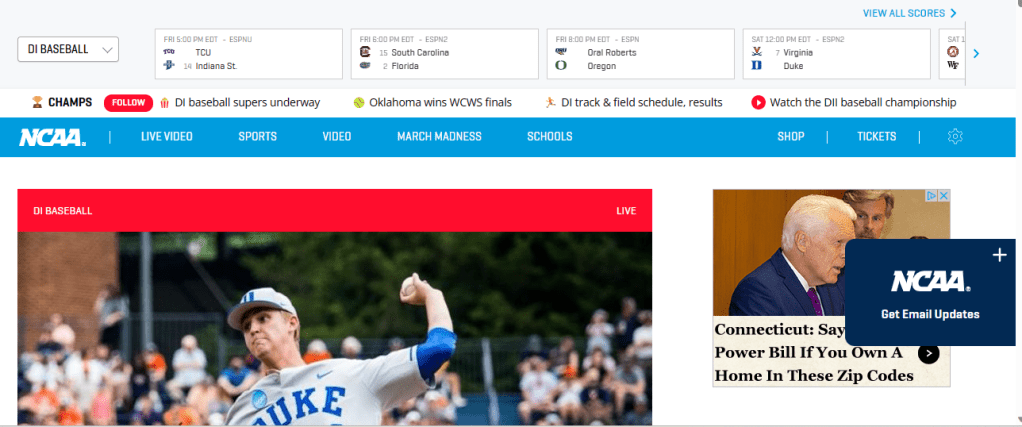
Throughout the NCAA site there are lots of stories, information and pictures. I thought there would be a lot more videos on the ncaa.com site then there was. Videos on NCAA.org seemed to be sprinkled here and there throughout the NCAA site. Under the Media Center tab however, videos could go to ncaa.com which was a whole link/ additional website of the NCAAs. NCAA.com featured the NCAA championships. There were tons of videos linked here. The videos that I did come across on the actual NCAA.org site included two PSAs and a video of the 2015 NCAA Women of the year Kristen (Day) Shute. Videos at times were also included in the “news” section on the site. When users would click a title of a story to read via a link, it then directed viewers to the story which at times included a video and other times pictures or both. 

Quality of Content 

The quality of content is engaging, informative, and concise. It is easy to read and also interesting.  Viewers are able to gain a wealth of information on what they desire when on the NCAA site.  The NCAA provides viewers insight into what the NCAA is. The part of the site that I found super helpful was the section/tab for student-athletes. With this section, potential student-athletes can read and gain all the information they need to help them assist in their college search. There are features to search the different divisions, and locations for future potential colleges to attend. There is an Eligibility center information. Under each of the different Division tabs (D1, D2, D3), there are additional links with information. The links to choose from include: home, about, priorities, members, students, academics, championships, committees, compliance, finances, governance, outreach, recruiting, and archived stories. The information displayed in each of these subcategories were highly informative and simply written. 

Discussion area of improvement 

Some areas of improvement would be to add more videos on the homepage along with catchy titles. I found the NCAA.com (championship) site much more exciting to be on than the NCAA.org official site. The NCAA official athletics page was very informative and driven by written stories. Whereas the NCAA championships site was driven more by videos, and pictures. Therefore, I think more videos need to be added to the official site of NCAA (NCAA.org). Learning and educational content alone drives over a billion views a day on YouTube. According to Wyzowl’s State of Video Marking Survey, 68% of people say they’d like to learn about a new product or service by watching a short video.

Another area for improvement would be at the bottom of the main page where the “connect with us” section was, there were a variety of pictures with the YouTube, Facebook, Instagram, and Twitter symbol. This made it confusing at first to see there were so many ways to connect to NCAA when in fact it was all the same social media ways to connect. Meaning, they had duplicate ways to connect via YouTube, Facebook, Twitter, and Instagram with different pictures.

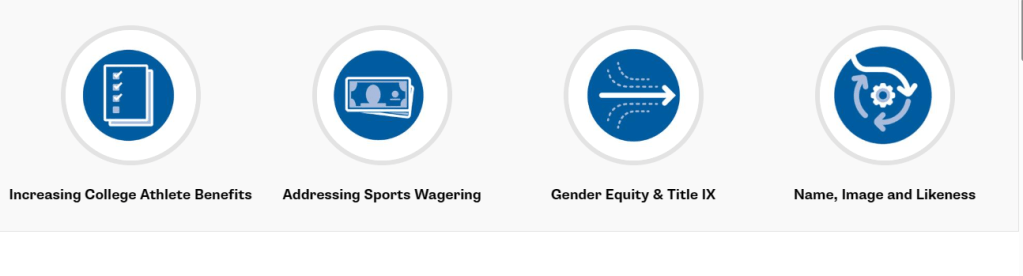
Another area of improvement would be to provide more engaging pictures instead of graphics for the section that had options for users to read about Increasing college, benefits, addressing sports wagering, gender equity & Title IX , name, image and likeness. 

Overall: 

Overall, I enjoyed my time exploring and learning more about NCAA. As a former college athlete, I wish I had used this site prior to my college search. It would have made my college search on where I wanted to play college soccer much easier! It also would have provided me with insight on what it is like to be a college athlete. I also found this site to be a good site to continue to stay posted on updated news related to college sports. For example, there were a few articles on rules added or changed in certain sports which I found interesting to read. As a coach I also have this site where I can help direct my players that are interested in playing college soccer or other sports. Also, when following the championships or march madness I know to go to the link ncaa.com on the ncaa.org website (or I can go directly to it by typing in ncaa.com. 

Food for thought: 

  1. What do you know about the NCAA? 
  2. What are the things that grab your attention most on a website? 
  3. Are you more into reading or watching videos when learning something new? Why? 

Extra Credit #1: Technology in Sports is Changing the Game

Technology seems to be taking off in sports. Even for the fitness lover, we saw a spike in technology fitness equipment such as the Pelton.  A number of other technologies already exist and are being used, while others are still in their early stages of being used.

 VAR or Virtual Assistants Referees, have been used in soccer games to determine offsides or other important calls such as goals, penalty kicks. VARs can be used to help referee games. Referees sit in a control room to use technology to help the field referee call the game. As a former athlete, we know in person refs will miss calls. By adding Virtual Assistants, perhaps there will also be less injuries since the games will be called tighter, with less fouls being able to not be seen. 

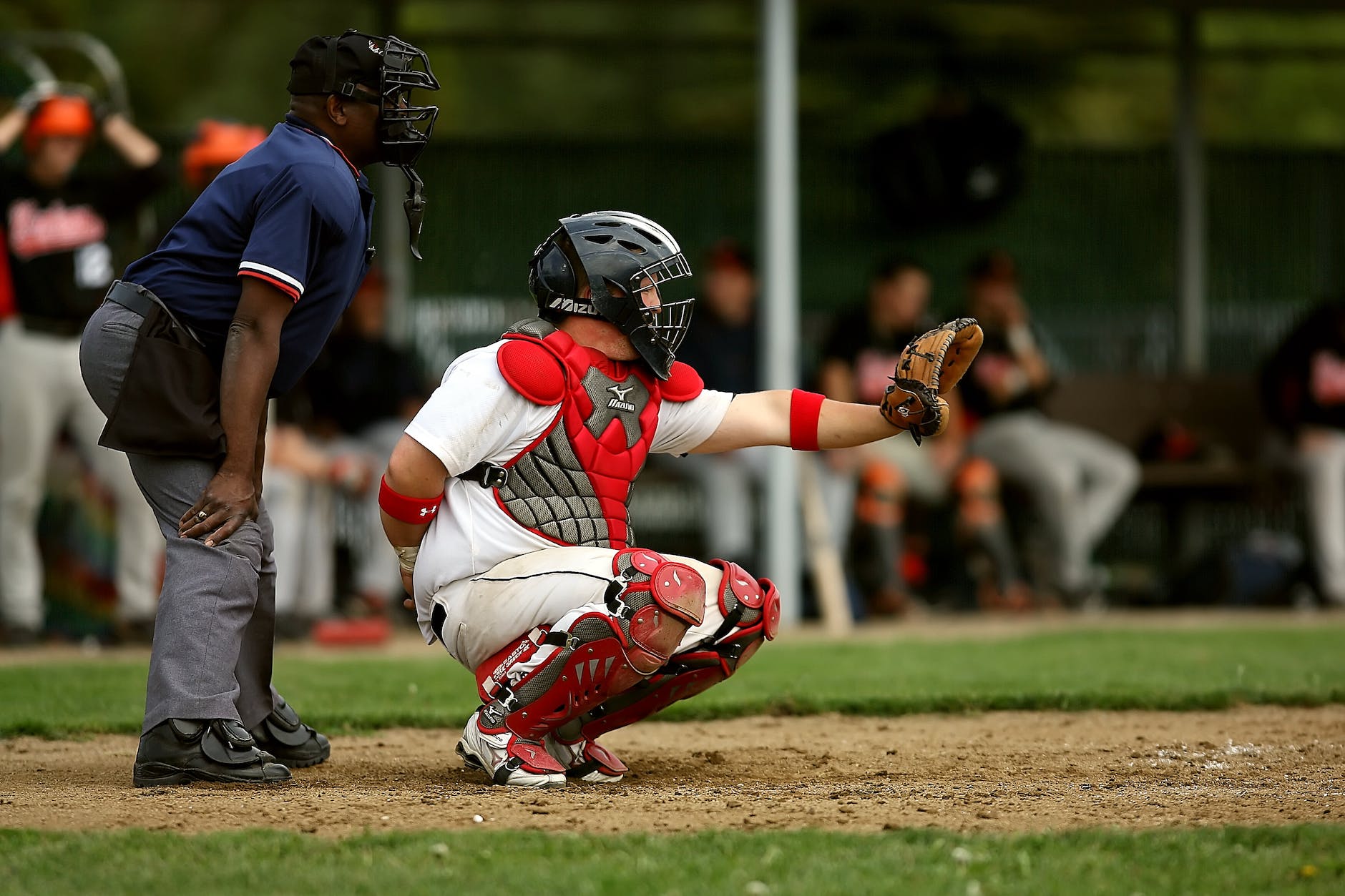
ABS or Automatic Ball- Strike System, can be used in baseball. This eliminates the different strike zones refs have, or watching where or how the catcher caught the ball. ABS is able to evaluate where the ball crossed the plate using radar. I think this invention is one of the most game changing inventions. There will be way less human error and will become significantly even more data driven. 

Sensors on bats have allowed players to determine swing speed, direction. There are already sensors on balls and pucks. As a former soccer player, if I had a soccer ball with sensors on it, it would have helped me tremendously improve my shot passing technique. I could determine the speed, angle and placement I hit the ball to improve. 

Photo by Pixabay on Pexels.com

Wearable tech such as apple watches and fitbits have allowed everyday people to improve their fitness. These tech can track heart rate, calories, steps and all other sorts of data, all while being sleek/small enough to wear comfortably. Apple watches are even considered a medical tech device

“Smart clothes” also exist for athletes to wear. Heart rate, breathing activity, postures, pace, and weight distribution are all measured by athletic clothing. Another wearable tech is tech with GPS trackers to track the players movements and positions. This data can then be used by coaches and players to adjust to game strategies. 

Streaming sports has allowed people from all over the country to be engaged in sports at a timely manner. No longer do people need to miss games due to not having the service. 

Timing systems have also improved. For running events the start pistol can be connected to start the clock. Lasers and touch sensors help track accurate times when athletes reach the finish line or other designated points in the race. 

There is even a device to check athletes’ mental focus. The device called the edge provides multiple activities athletes can use during competition to stay focused. 

Hawk eye is a computer and camera system that follows a ball’s direction. Hawk eye system is also able to determine if a ball crossed a goal line or out of bounds line using goal line sensors. The system allows the information to be sent to a referee headset or written while referring to a game to be able to make the correct call. Many other sports including football are looking into the use of hawk eye technology to be able to accurately determine if the ball crossed the line. 

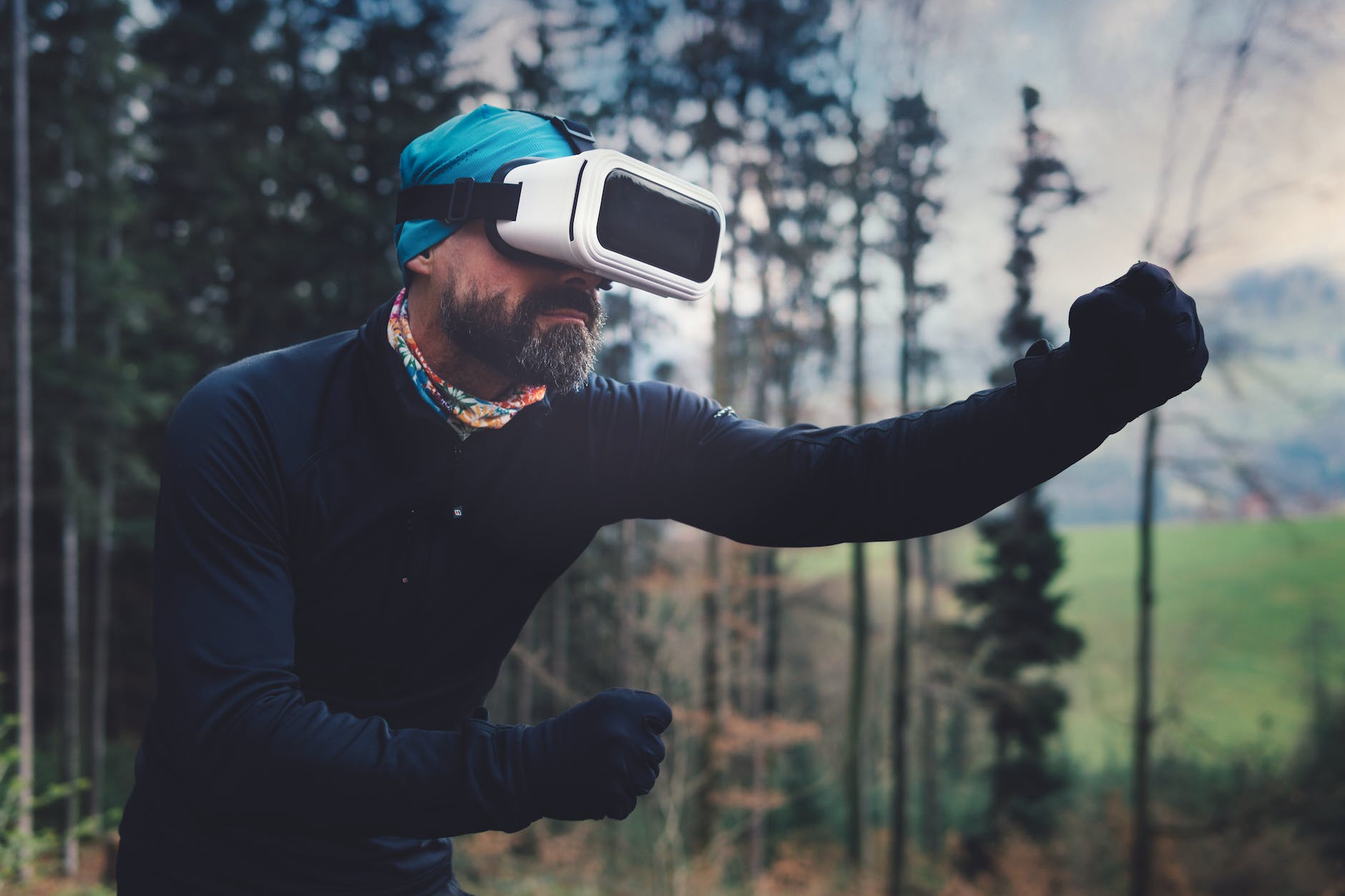
Some teams are using virtual reality to create game-like scenarios for athletes to improve their decision making skills during games. Headsets can be worn to stimulate different situations for players to practice in. 

Photo by mali maeder on Pexels.com

By the use of technology it sure does makes me wonder if this will help even the playing field to those that are talented by may need the extra data to help close the gap compared to their opponents that may have an advantage in the size of the player, athletic build of the player. The use of these innovations can help the player that may not be as genetically gifted compared to their competition, but rather has to work harder at their chosen sport to be successful. 

This is an exciting time in sports! We have already seen ways technology has been introduced in sports by instant replay, cameras, and drones. The technologies mentioned previously in this blog are going to elevate sports to an even greater level. Athletes and coaches will now have more tools to use to help them prepare for athletic competitions and to improve their individual players’ games. Fans will be able to be even more engaged in sport by having more ways to be involved with their favorite athletes and teams. If technology in sport is improving this quickly, it makes you wonder what the future of sports in 10,15, 20 years will be like. It could end up being a completely different game compared to the ones today. 

Overall, technology is advancing sports but also making it better! The article 20 Ways Technology has made sports better provides great examples of certain technologies used and how specifically each technology has improved sports. From watching sports, to referring sports, coaching sports, and training all aspects of sports are being elevated through the use of technology. 

Food for thought: 

  1. Which innovation do you think will have the greatest impact on sports?
  1. Which technology tools were you already aware of? Which ones were you not? 
  1. Do you use any technology when it comes to your personal fitness? If so what technology? 
  1. Do you have an idea of a technology that needs to be developed due to a certain need in a particular sport?

Technology Deprivation: you in?!

Photo by Kerde Severin on Pexels.com

Do you think you could spend a whole day without looking at your phone or using a computer?! 

 One of my assignments for a Graduate class I am taking was to complete a “technology challenge” as I like to call it. This meant going without using my phone or internet for 24 hours. I decided to ask my dad to complete the challenge as well. Lately, he has become more addicted to his phone than my high school students! When I reviewed what the technology challenge all entailed, my dad seemed stressed!  I was in some ways looking forward to not using my phone as much, but also wondered how hard it was going to be for me! 

Start to day: (6:00am) – Every morning, I take a picture of my dog and send it to my mom and dad. As I woke up and attempted to take a picture of my handsome sweet dog, I immediately put the phone down and remembered I couldn’t do that today. I thought to myself “no big deal, that wasn’t too hard to avoid.”  I then began my 50 minute commute to work. Every morning, I reach a certain spot in my drive and make a morning call to my mom to check in and see what my parents are up to today. I went to make the call on my bluetooth, and caught myself again saying, “nope can’t do that either.” 

1st & 2nd Health class- My day then transitioned to teaching back to back 9th grade health classes. As I was teaching, several texts came through on my apple watch which I would normally take a look at during class. Instead, I did not and focused on teaching. It made me think none of those texts are probably important anyways so no need to look at them or respond right away. My school has become very reliant on using technology to complete work on students’ computers. Instead, I did a lesson which involved all interactive activities where students had to do a handshake game, bingo on our unit topic and draw a villain along with the information on their assigned topic. I found all my students were engaged (no one was on their phones during this class or playing games on their computer). My classroom was also the quietest it has been all year while they drew and colored their villain. For a stress lesson we did earlier in the semester, we learned that drawing, coloring and journaling is very therapeutic. By doing these activities and taking an “old school approach” to assignments, I feel I saw first hand the therapeutic effects of these activities. 

Lunch time (10:23-10:53am) – Usually during lunch, I call my mom or dad to see how their day is, check in on my dog or even facetime to see my dog! I also use that time to call my friend Xenia. I didn’t make either phone calls. Instead I ate my lunch in silence. Also during lunch, I usually check facebook and instagram.  I took my phone out and went to click the facebook app then went to click instagram app, before stopping myself and saying “can’t do either of them!” It kinda blew me away a little how my brain and hands were so automatic to complete these actions. It was like I didn’t even think first about clicking these apps. My brain is so conditioned, it was just like a normal routine. Since my health classes are both high energy classes, I just sat and decompressed for a few minutes. I then began to think of all the stuff I had to get done that day. I wanted to go on athleticnet.com since we have our track championship tomorrow to prepare for our opponents and use the pacer calc to do my runners lap paces. I once again had to remind myself nope can’t do that either! Next thought was that I need to text my friend Brittany to see how she’s doing and make plans for this weekend, but I guess I’ll have to do it another day. My “to do” list began to build as I thought about what else I needed to do today, but all of it revolved around technology (changing an appointment, calling another friend). I started to get overwhelmed with the things I couldn’t do during lunch because they involved technology. 

Rest of school day 10:53-2:40 pm= I had advisory since it was nice out. I took the kids outside to join other classes for some freetime. During the winter months, this class would have been on their phones as well as me taking a mental break and scrolling social media. Instead I socialized with my coworkers outside. I used my prep period to grade the villain drawings and clean/organize my office. This time is also a time I usually end up scrolling on social media or browsing on the web. According to Harvard Business Review, I am not the only one scrolling on my phone during the work day. According to the article, “The Psychology of Your Scrolling Addiction,” 77% of employees use social media while on the clock, many of them for up to several hours a day. I definitely could relate to this, since I had caught myself throughout the day on times I usually would go on social media, but instead how to do something else. 

2:40= It was time to drive from school to an appointment. During this long drive, I usually make multiple phone calls to pass the time. Since I could not do this, I found myself wondering what my mom was up to, and that I would have to wait tomorrow to make my other usual phone calls. Once I reached my appointment, I sat waiting for the doctor. Without even thinking, once again so nonchalantly, I took out my phone, clicked on facebook app, closed it quickly without looking and clicked insta and immediately closed it. It was then that I realized I seem to go to check social media when I am alone and bored. I tried to pass the time while in the waiting room but just sitting in silence and being present. While sitting there I was thinking “wow this is how life use to be. It felt like a slower lifestyle and pace for me. It made the time go by slowly. 

Photo by Anete Lusina on Pexels.com

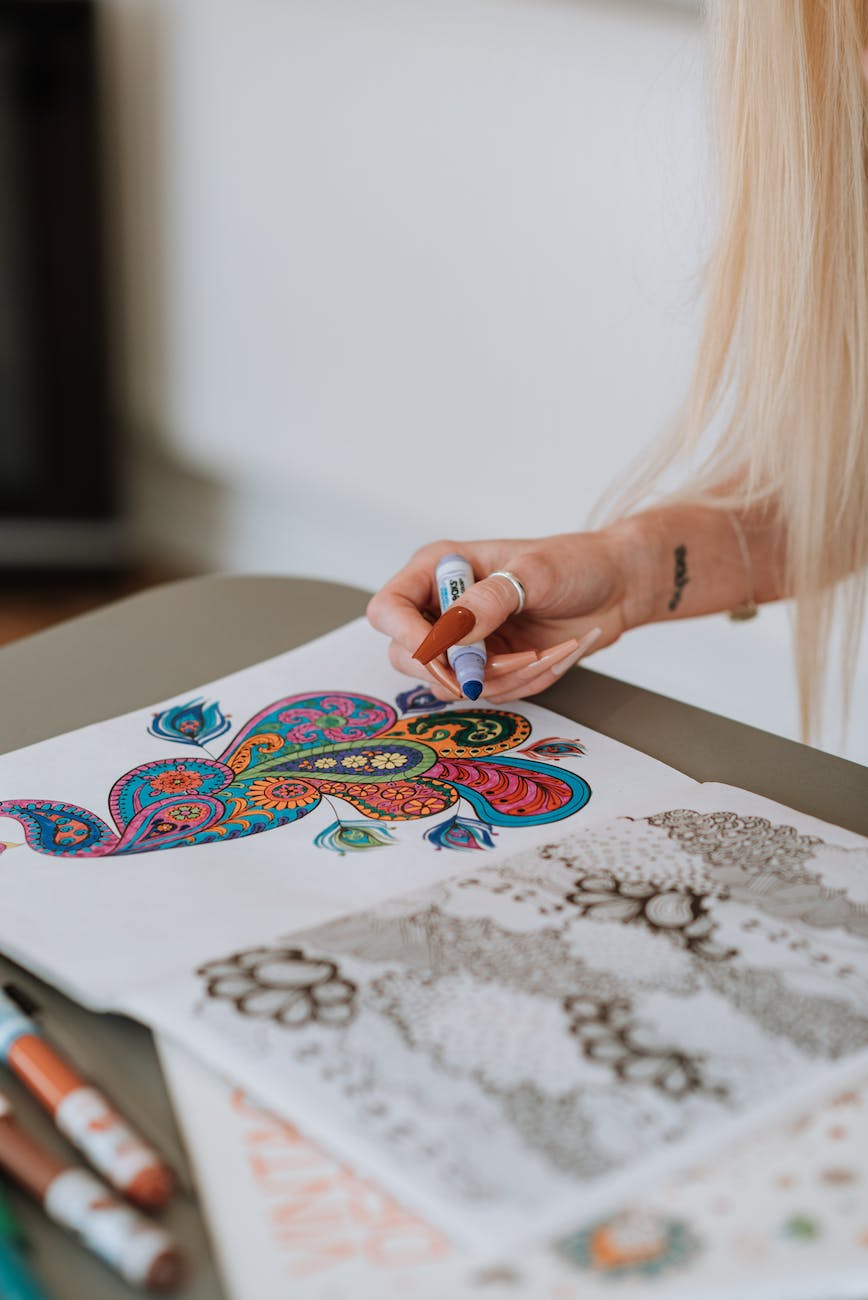
5:00= went to pick up my dog and head home. Time to eat, shower, and relax. After eating dinner i was relaxing on the couch, also a time i usually catch up on social media. I played ball with my dog. I kept wanting to look at social media and felt myself fighting the urge to check. I decided to do some coloring in an adult coloring book I have had for months and have not done once. I then took my dog on a walk. During the dog walks i usually make another phone call to my mom and a friend or two. By not calling anyone, it allowed me to be more present. At times I was bored throughout the day by not being able to search the web or make calls. By being more present in the moment I found that I had more time in my day and allowed me to rest and at times bored which showed me that I’m not supposed to be simulated every second of the day which I have become very use to. 

Usually after everything is organized for the next day and my night time routine is completed, I hop into bed early, lay with my dog, text any friends / make any phone calls to friends, call my mom or dad, and scroll facebook instagram and read the news on my phone. I usually end up in bed around 8:30ish and engage in all the above activities, and end up not going to bed until 10:30. Since I could not participate in any of those activities, I decided to close my eyes. I fell asleep from 8:30-9:30pm. I woke up and tried to go back to bed but couldn’t right away. I laid there and felt a bit isolated since it was just me and I couldn’t connect with anyone or anything. I reflected on my day without technology. I realized my emotions were up and down regarding this challenge. Sometimes I felt relaxed in the moment, and that I was able to be more present in the moment which made me feel calm. I felt less anxious at times, which goes with the findings from the article; Psychology today. Other times throughout the day I become frustrated because I needed to contact someone or look something up but couldn’t. I was overwhelmed at times because I needed to get stuff done but couldn’t since it required technology. My to do list began to get longer and would be pushed into the next day. Now looking back shouldn’t make me too stressed because everything will get done. 

Overall I felt myself more present throughout the day and more mindful. I was focused on only me throughout the day and not on others on social media. I felt like my brain was not overstimulated. Usually I feel like my brain and thoughts are nonstop since they are stimulated all day long from technology. Instead I felt like I was able to slow myself down, not have thoughts racing in my brain all day. 

Summer I am usually so busy enjoying the day that I do not use my phone much. Maybe this is why I like summer more because I am truly present more often. I am going to continue to limit my social media time and instead do other activities instead of using technology (mostly my phone). I journaled some things I want to do this summer / this year and also found this article for some more ideas! 

Photo by Lisa Fotios on Pexels.com

My dads reflection= hated going without his phone. When my mom got a text he would say whose that? What did they say? Missed searching the web, buying stuff on amazon. Kept himself busy doing around the house tasks and yard work. My dad hated going without his phone/ the internet. Whereas, my mom loved that he was not able to go on this phone so he could be more present and social instead of always on his phone and missing out on the conversation. 

Food for thought

  • How can we encourage others to not be on phones as much, but instead be more present (especially my students)! 
  • Would you choose to go back to how life was prior to our technology dependent lifestyle (90s or stay how it is)? 
  • What are some other activities you could be doing instead of on your phone or using technology?